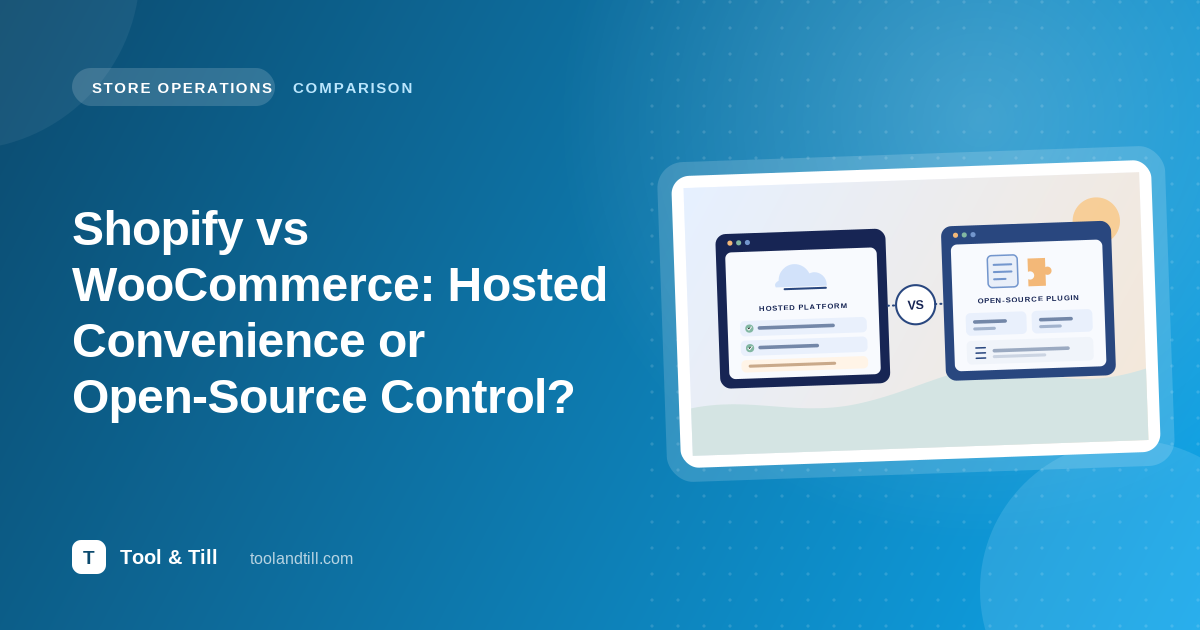
Shopify and WooCommerce solve the same problem in opposite ways. Shopify is a hosted platform: you subscribe to a plan and Shopify runs the software and checkout. WooCommerce is an open-source plugin that turns a WordPress site you host into a store. The better choice depends less on feature lists and more on who will run the store day to day.
The short answer
- Shopify fits owners who want to launch quickly and hand hosting, updates, and checkout infrastructure to the platform.
- WooCommerce fits owners who already use WordPress, want full access to code and data, or plan to grow through content.
- Without a developer or WordPress experience, the hosted route is usually the shorter path to a first sale.
Costs: compare structures, not headline prices
Shopify charges a plan subscription and payment processing fees. Its help center says third-party transaction fees apply when you take payments through an outside payment provider, the rate depends on your plan, and those fees come on top of the provider's own processing fees. Orders processed through Shopify Payments are not charged third-party transaction fees.
WooCommerce describes its core platform as free and open source. Running it still involves costs: hosting, a domain, any premium extensions or themes, payment processing from the gateway you choose, and the time or developer help needed for maintenance. Check each vendor's current pricing page for your country before deciding; we do not quote prices here because they change.
Setup and maintenance
On Shopify, you choose a theme, add products, set up payments, and publish without managing a server. On WooCommerce, you need WordPress hosting that meets the plugin's requirements, then install and configure the store. WordPress.org lists minimum PHP, MySQL or MariaDB, and WordPress versions, and recommends HTTPS and a memory limit of at least 256 MB.
Updates are part of WooCommerce ownership. Its own FAQ notes that problems after an update can come from a conflict with an outdated theme or plugin, so keep backups and test updates on a staging copy when you can.
Customization, data, and content
WooCommerce emphasizes control: developers can inspect and modify the core plugin code, use a REST API and webhooks, and build custom blocks. WooCommerce also states that store owners keep ownership of their content and data and can export it to another platform. Because it runs on WordPress, it suits stores that publish guides and other content alongside products.
Shopify's themes and app ecosystem cover most common store needs without code, but you work within the platform's structure. That trade-off is the point of a hosted platform: fewer decisions and less upkeep in exchange for less low-level control.
Payments and extensions
WooCommerce lists support for more than 100 payment gateways, including Stripe, PayPal, and Square, plus free and paid extensions from its marketplace. On Shopify, the main payment question is whether Shopify Payments is available for your business and country, because that decides whether third-party transaction fees apply.
Questions to answer before choosing
- Who will handle hosting, updates, backups, and security fixes?
- Is Shopify Payments available for your country and product type?
- Which payment gateway, shipping, and tax tools does your market need?
- Will content and SEO be a main traffic source for the store?
- How much custom checkout or product logic do you expect to need?
- If you switch later, how will you export data and redirect old URLs?
This is a documentation-based comparison, not a hands-on test. We have not measured speed, sales, or support quality, and neither platform is labelled a winner.